Demystifying Venture Capital: Reflections from My First Year
I wrote this piece to demystify venture capital, especially for emerging managers like myself. When I was starting out, I would have loved to read reflections like this from those ahead of me. Now, just over a year into the life of GD1 web3 Fund 1, it has been a rollercoaster full of challenges and lessons.
When I first considered starting the fund, I had numerous conversations with other first-time fund managers who had just raised their own funds, as well as seasoned VCs who had been in the industry for many years. One thing became clear: raising a fund takes much longer than expected, and it’s every bit as difficult—if not more—than people say.
The Role of a Venture Capitalist: Especially as a Solo GP
As a solo general partner (GP) raising a fund, the experience mirrors that of a founder raising capital. Founders can often identify who to pitch for investment, as many VCs and angel investors are open about their areas of focus and are generally accessible. In contrast, raising a VC fund can be more challenging, as many limited partners (LPs) are not as visible or public about their interests and typically prefer not to be pitched unless there’s a strong referral or prior relationship.
My time as a solo GP is primarily divided between two key areas: securing commitments from LPs, maintaining those relationships, and investing in and supporting portfolio companies. The most rewarding part of this work for me is meeting and backing the next generation of entrepreneurs.
The Fundraising Journey
During the fundraising process, I pitched to over 250 potential LPs, including GPs from other VC funds, tech executives, family offices (FOs), high-net-worth individuals, wealth managers, crypto enthusiasts, and others. These efforts helped us secure the support of around 40 LPs for our first fund, and I’m incredibly grateful for their backing. Having unlimited access to the Managing Partners of GD1, Vignesh and John, who had just finished raising a NZ$150M fund, was invaluable. Their pitch feedback and clear advice on the best fundraising strategies made a huge difference. One strategy that worked well for us was offering a flexible minimum investment amount, which allowed us to welcome LPs who met the wholesale and eligible investor criteria but might not have been able to meet the higher minimums typical of other VC funds.
The Impact of Market Timing
One of the most important lessons I’ve learned is the critical role that market timing plays in raising a venture capital fund. I began angel investing and observing others raise their first funds during the peak of the Zero Interest Rate Policy (ZIRP) era, which gave me the impression that first-time GPs could raise significant sums with relative ease. However, I started fundraising shortly after the Reserve Bank began increasing interest rates. The macroeconomic environment, I quickly learned, significantly impacts both the venture capital asset class and the fundraising process—something I hadn’t fully appreciated before starting this journey.
What do I mean by this? For many emerging managers, FOs are a key LP type to target. However, in a high-interest-rate environment, I found that local FOs became much more conservative with their capital. They preferred to invest in familiar assets like real estate and cash-flowing businesses rather than venture capital, particularly in crypto VC, a space many New Zealand FOs had limited exposure to. Additionally, many local FOs were heavily invested in real estate, and as interest rates rose, they had to conserve capital to meet their own increased interest payments. Some FOs had also deployed capital into illiquid asset classes like VC during the ZIRP era and were waiting for distributions before considering new managers.
Why People Pass
Just as feedback is crucial in the VC-startup relationship, we welcome constructive feedback from LPs and peers to help us grow. We've learned some valuable lessons from those who passed on investing in our fund. Their reasons included: not being specific enough, the location focus not being narrow enough, poor timing, they don’t invest in Fund 1’s or the fund size being too small. Some also said no because they still don't think crypto VC is a legitimate asset class. These insights have helped us refine our approach for the future.
Operational Complexity and the Importance of Support
Another major takeaway as a first-time fund manager was the sheer volume of back-office work required. Compliance, LP onboarding, company onboarding—all of these operational tasks take time and effort. Fortunately, being part of an established firm like GD1, with an established Ops team, allowed me to focus on the critical aspects of fundraising, deal sourcing, and investing.
Investing: The Heart of the Work
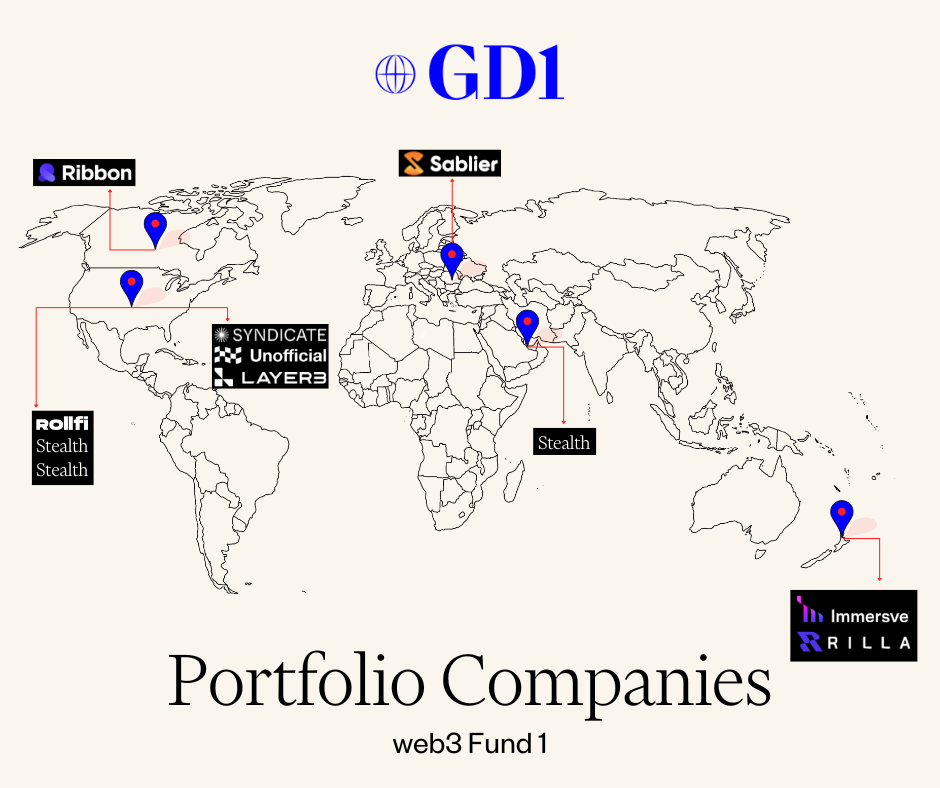
Since our first close mid-last year, I’ve been actively investing—the part of the job I love the most. Diving deep into various areas of the crypto world has led us to make some exciting investments. So far, we’ve made 11 investments globally, 8 of which have been publicly announced. You can find more details about these investments and my rationale for them in the investment notes on our blog. Our portfolio companies are performing well. Several are already generating revenue, a few have raised follow-on funding since our investment, and others are successfully executing their roadmaps and onboarding new users.
Looking Ahead
Over the past six months, my focus has shifted from fundraising to deal sourcing and investing. While many crypto VC funds are back in the market raising new capital, we are preparing for our final close. With investable capital on hand, we are in a strong position to be highly selective with our investments moving forward, something I’m particularly excited about.
If you're interested in learning what it means to be an LP with us, please DM or email me. If you're a founder building something in web3, I’d love to connect and explore how I can help!
Written bY
Nawaz Ahmed

.png)
.png)
